
Origins and History of the Aramean Civilization
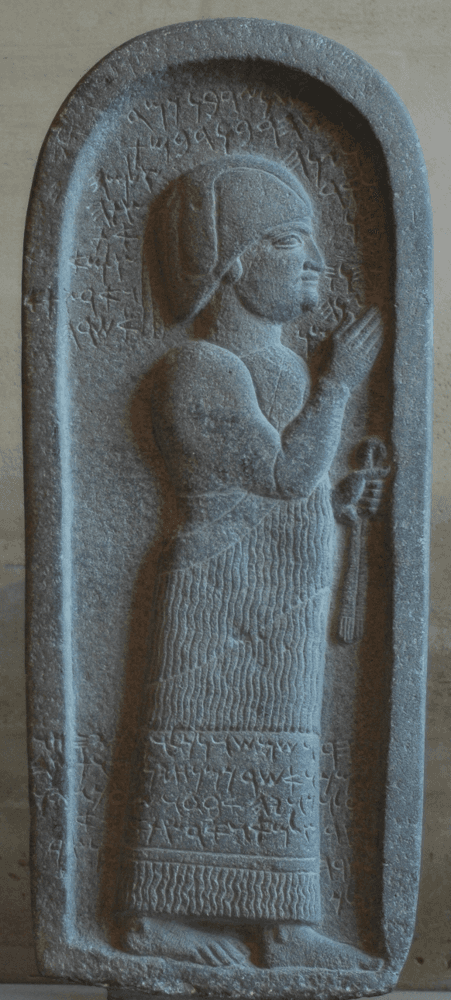
The Aramean civilization emerged in the heart of the Fertile Crescent during the period of the Late Bronze Age collapse (around the 12th century BCE). The Arameans appeared as one of the Semitic nomadic peoples who settled in what is now central Syria and spread from there to neighboring regions. The Arameans were not a unified empire; rather, they consisted of independent tribes and city-states, each enjoying a degree of autonomy within the broader region historically known as Aram.
Several prominent Aramean kingdoms arose in the Levant, most notably the Kingdom of Aram-Damascus in Syria, which reached the height of its power in the ninth century BCE under King Hazael. Other Aramean kingdoms also existed, such as the Kingdom of Hamath in central Syria and northern kingdoms near Aleppo, whose influence extended across parts of the Levant, including present-day Syria and Lebanon. Historians estimate that the Arameans dominated large areas of historical Syria from the beginning of the Iron Age (around 1200 BCE). Their kingdoms are mentioned repeatedly in ancient records, including Assyrian sources and biblical inscriptions.
The Arameans engaged in conflicts and interactions with neighboring powers, particularly the Neo-Assyrian Empire. In the eighth century BCE, their cities fell one after another under Assyrian control. The Assyrians implemented a policy of mass deportation, relocating large numbers of Arameans to other parts of their empire. Paradoxically, this policy contributed to the wider spread of the Aramaic language, as the displaced populations carried their language and culture wherever they settled. During this period, Aramaic began to evolve from a local language into a regional lingua franca. By the Neo-Babylonian and Achaemenid Persian periods (sixth and fifth centuries BCE), Aramaic had become the language of public administration and the official language of the empire under the designation “Imperial Aramaic.”
As a result, the Aramaic alphabet and its written forms spread throughout the ancient Near East and were adopted as a common writing system among diverse peoples. It is worth noting that the Aramaic alphabet itself developed from the Phoenician alphabet in the early first millennium BCE. From Aramaic, other writing systems later emerged, most notably the Nabataean script, from which the Arabic alphabet ultimately developed. This evolution places the Arameans at the core of the region’s linguistic and writing heritage.
With the arrival of the era of Alexander the Great and the subsequent Hellenistic and Roman periods, Aramaic culture was influenced by Greek and Latin cultures (Hellenization and Romanization) through sustained contact. Nevertheless, Aramaic persisted as a popular spoken language in the Levant, especially among the general population outside major urban centers, which were more heavily influenced by Greek. The Aramaic language, in its various dialects (including Syriac in later periods), continued to be used as a spoken and liturgical language among local communities for several centuries, even after the spread of Christianity in the region. It is also noted that Jesus Christ himself spoke Aramaic in the first century CE, giving the language a special status in Eastern Christian religious heritage.
By the seventh century CE, with the Islamic conquest of the Levant, a gradual process of cultural and linguistic transformation began. Many Arameans gradually embraced Islam and adopted the Arabic language, which became dominant under Islamic rule. Over time, this led to the Arabization of the region, and the descendants of the Arameans merged into the emerging Arab social fabric, while retaining certain traditions and spoken forms of their language in isolated pockets. Although the Aramean political identity disappeared, their historical legacy endured. The Aramaic language did not vanish entirely; instead, it survived in multiple dialects, most notably Syriac, which remained the liturgical language of Eastern Christian communities in Syria, Lebanon, and Iraq throughout the Middle Ages. Moreover, some villages in the mountains of Syria (such as Maaloula and Jubb‘adin) have continued to speak Aramaic to this day, serving as living testimony to the survival of Aramean civilization.
In this way, it can be said that the Aramean civilization—despite being absorbed into larger political entities—left an enduring imprint on the history of the Middle East through its language and cultural heritage, which was transmitted to the civilizations that followed.